
There are no more items in your cart


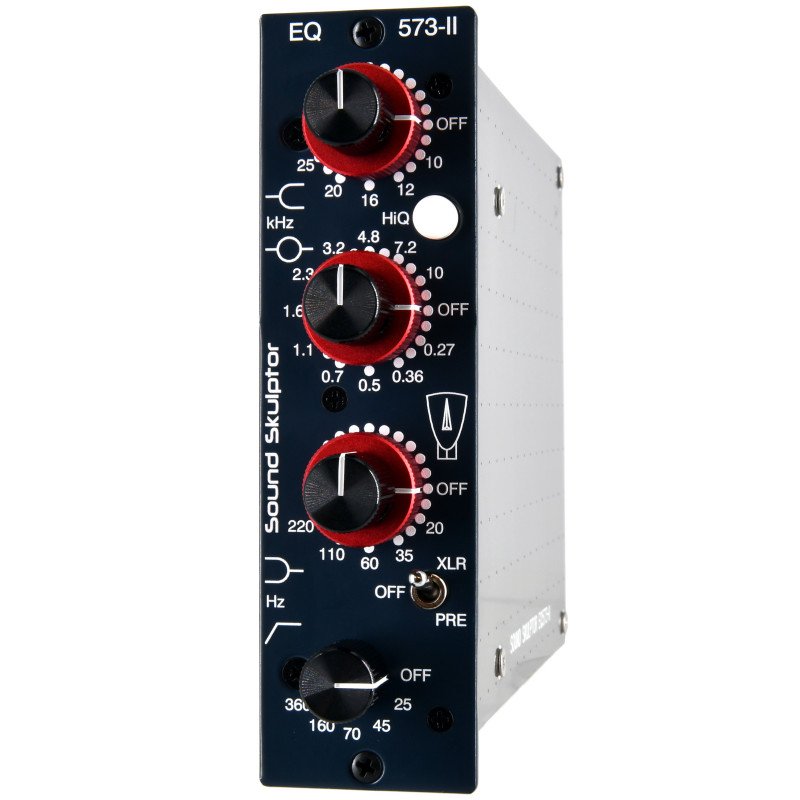
The EQ573-II is an parametric equalizer based on the design that was originally used in the Neve 1073 and 1084 modules, that has been adapted to the '500' format of API*.
 Secure payments
via Paypal, Stripe or bank transfer
 Worldwide shipping
on Mondays and Thursdays
 DIY 100% de succès
Documentation premium - Forum de support - Service de réparations

The EQ573-II is an parametric equalizer based on the design that was originally used in the Neve 1073 and 1084 modules, that has been adapted to the '500' format of API*.
The EQ573-II can be used as a standalone unit but also as an insert, between the input and output stages of the MP573 mic pre, recreating the full architecture of the 1073.
the EQ573-II is the successor to the EQ573. The improvement mainly concerns the ease of assembly and the reliability of the final product. The audio behavior is the same, the only differences being the lack of attenuation when inserting into an MP573 and the removal of intermediate Q in the mid band.
Just install it in your API* compatible LunchboxTM rack and start recording.

1 High shelf corner frequency: From 10kHz to 25kHz (OFF=disabled).
2 High shelf level: Sets the high frequency attenuation or boost from -16dB to +16dB.
3 High Q Gain switch: Modify the Q of the mid frequency band.
4 Mid band center frequency: From 270Hz to 10kHz (OFF=disabled).
5 Mid band level: Sets the mid frequency attenuation or boost from -18dB to +18dB.
6 Low shelf corner frequency: From 20Hz to 220Hz (OFF=disabled).
7 Low shelf level: Sets the low frequency attenuation or boost from -16dB to +16dB.
8 Source Selects the source of the EQ between XLR and a linked MP573 preamp (OFF=bypass).
9 High pass filter: From 25Hz to 360Hz (OFF=disabled).
Absolutely everything!
You bring the solder (use good quality solder, 1mm diameter max) and the Lunchbox.
The EQ573 kit is a rather complex build because of the high components density.
| Measure | Conditions | Value |
| Iddle supply current | No input signal | I = +/- 40mA |
| Input impedance | f=1kHz on XLR | 20kΩ |
| Maximum input level | on input XLR | +25dBu |
| Maximum output level before clip | on output XLR | +26dBu |
| High Freq maximum boost/cut | +/-16dB | |
| Mid Freq maximum boost/cut | +/-18dB | |
| Low Freq maximum boost/cut | +/-16dB | |
| High pass filter attenuation | -18dB/octave |
| DOCS Code | Documents |
| From DOCS-21 | User manual Parts list Components layout Assembly guide Schematic |
| From DOCS-8 to DOCS-20 | User manual Parts list Components layout Assembly guide Schematic |
| From DOCS-5 to DOCS-7 | User manual Parts list Components layout Assembly guide Schematic |
| From DOCS-1 to DOCS-4 | User manual Parts list Components layout Assembly guide Schematic |
The Sound Skulptor EQ573-II (Revision 2.2) is a professional-grade, inductor-based equalizer designed for the 500-series format. It is a hybrid architecture combining high-performance operational amplifiers, discrete transistor gain stages, and passive LC (inductor-capacitor) filter networks.
The signal enters the unit through the balanced IN+ (B10) and IN- (B8) pins. An OPA2134 operational amplifier (U1.1) serves as the initial input buffer. Relays (RLY1.1, RLY1.2) manage the bypass and routing, including an external Send/Return insert point at J2 which is used to insert directly in the MP573 preamp.
The signal proceeds to a second dedicated Class-A gain stage for mid-range processing.
Once the signal has passed through the three equalization bands, it reaches the High Pass Filter and output driver.
The unit utilizes the standard 500-series +/-16V power supply.
Protection: IN4004 diodes (D3, D4) provide polarity protection.
Discrete Audio Rails: Stable local voltage rails (V+a and Va-) for the discrete transistor stages are created using an RC filtering network with C83 (330uF) and C84 (1000uF) capacitors.
This Module was my 2nd DIY build. After I learnd my lesson on my 1st build, what it means to organise all parts befor you start, It was a joy to build this EQ.
And in the end, the most important thing is, this module rocks!!! Compared to my UAD 1073 EQ the EQ curves are very similar and the sonic characteristics are very close, but through the hardware unit, the signal has more body, is more 3 dimensional. I really love this peace of gear. Next thing is building the MP573 an run the EQ through it...Thank you Jean-Pierre for these beautiful kits.
This EQ needs a lot of patience and concentration while building it, but it is absolutely worth the effort. It’s the perfect supplement for the MP573 preamp. I use it in my studio for tracking on every single track. It’s so musical that you rarely need any other EQs with more bands. If the sound is allowed to get coloured in a nice way you can even use it for mastering – I did this and achieved great results in no time (faster than with a Pultec). It’s great that the EQ573 combines the 1073 and 1084 models: You have a bandwidth switch for the mid frequencies and more frequencies available for the high shelf. It’s worth looking at the frequency response while using it (with Waves Q-Clone for instance) – you begin to understand why you don’t need more EQ bands for a perfect sound ;-)
I disagree with the other reviewer here: I don’t find it harsh at all (if you use it "correctly"). But as always, you should also consider using it for cutting the frequencies you don’t need and not only for boosting. With a reasonable combination you have a high class musical sound and lots of possibilities.
For the record, I had never soldered before I bought my first Sound Skulptor kit (CP5176). Also, I am not a trained recording engineer. This is the only Sound Skulptor I would give a 4 (out of 6 I own). What I've noticed after using this for a little over a year is that it can be a bit harsh. I use it more for HF/LF cut, and gentle tuning in the inner frequencies. I run it "inside" of my MP573 (which I love!), and occassionally in series when I am not getting the results I'm looking for. The build is a little tricky getting the pots and set up straight, but I had a lot of fun learning how this parametric structure works.
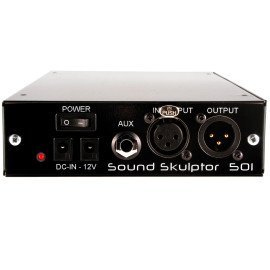
The SK501 is a single slot, 500 series compatible case and power supply.
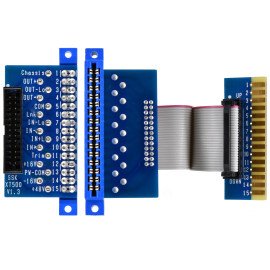
The XT500 is an extension cable which lets you connect a 500 series module to your lunchbox while keeping it outside for easy setting or maintenance.

This screwdriver has a recessed head at one end which prevents it from sliding off the trimmer potentiometer head you are adjusting. Very convenient when you are working inside your lunchbox.
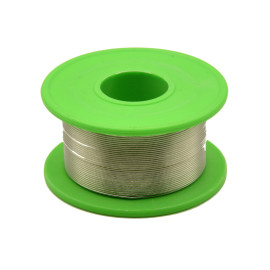
Lead-free solder spool, SN99.3 CU0.7, 0.5mm diameter, 50 grams
We've noticed that many of the assembly challenges reported by beginners are caused by inappropriate solder. This spool should eliminate those problems.
The EQ573-II is an parametric equalizer based on the design that was originally used in the Neve 1073 and 1084 modules, that has been adapted to the '500' format of API*.
04/02/2026
Great EQ - love it
After the LA502, the EQ573-II was the second module I built. The EQ is significantly more complex than the compressor. The most important thing — and here I agree with the previous speakers — is to take your time. You have to work very carefully, especially when mounting the many capacitors. If you work neatly, they fit well on the board.
And now for the most important part: the sound. It’s a treat to listen with just your ears. I really enjoy working without the distraction of colorful EQ curves.
The highs are addictive. I have to keep reining myself in. With vocals and acoustic guitar, you reach your goal very quickly and put a smile on the musicians’ faces during recording.