

There are no more items in your cart


The TS500 is an analog processor that recreates the sonic imprint of vintage tape recorders. It provides the roundness, the punch, the compression and the saturation of magnetic tape.
 Secure payments
via Paypal, Stripe or bank transfer
 Worldwide shipping
on Mondays and Thursdays
 DIY 100% de succès
Documentation premium - Forum de support - Service de réparations
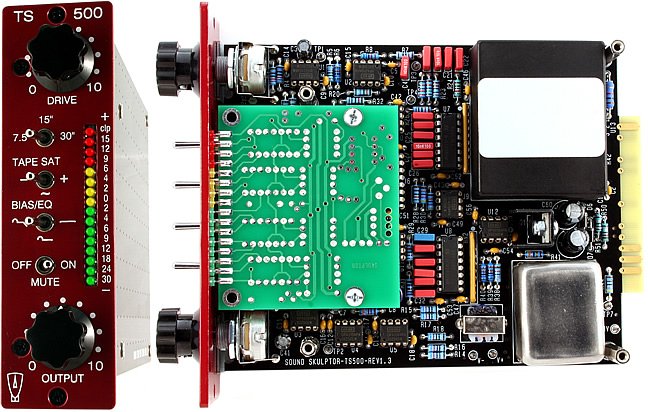
The TS500 Tape Simulatoris the successor or the Stereo Tape Simulator. It has been adapted to the API* 500 format with a number of enhancements. It is an analog processor that recreates the sonic imprint of vintage tape recorders. The effect provides the roundness, the punch, the compression and the saturation of magnetic tape. It is a mono unit, two are used for stereo.
The TS500 includes the electronics of a vintage tape recorder with input transformer, variable gain input stage, pre-emphasis stage, recording amplifier, constant current driven tape head, playback amplifier, NAB de-emphasis stage and a pure class A output stage driving the output transformer.
The TS500 can simulate a tape recorder rolling at 3 different speeds: 7.5 ips, 15 ips and 30 ips. Each speed gives a different frequency response.
The tape can be chosen between 3 formulations giving 3 levels of saturation from light to heavy.
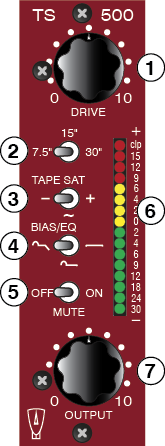
1: DRIVE potentiometer Adjusts the input gain of the TS500. The potentiometer action is directly visible on the peak-meter as well as on the effect intensity.
2: Tape speed 7.5"-15"-30" Modifies the bandwidth and the head bump frequency in the way a tape recorder rolling at 7.5, 15, 30 ips would do.
3: Tape saturation 3 tape formulations giving 3 saturation levels from light [-] to medium [~] to heavy [+] saturation.
4: BIAS/EQDefines how the bias and EQ settings of the recorder will correct the frequency response defaults.
5: Bypass switch
6: Meter The high resolution meter is a tool that lets you calibrate the simulation and get repeatable results. The clip LED at the top indicates that the signal is clipping in the input stages.
7: OUTPUT potentiometer Adjusts the output level and allow compensating the level changes induced by the DRIVE potentiometer. It has no effect on the simulation.
Absolutely everything!
You bring the solder (use good quality solder, 1mm diameter max) and the Lunchbox.
The TS500 is a medium difficulty kit. Nothing very difficult but a rather large number of components and a good density.
The setup is simple. It only requires a decent quality AC/DC voltmeter.
| DOCS Code | Documents |
| From DOCS-19 | User manual Parts list Components layout Assembly guide Setup guide Schematic |
| From DOCS-17 to DOCS-18 | User manual Parts list Components layout Assembly guide Setup guide Schematic |
| From DOCS-10 to DOCS-16 | User manual Parts list Components layout Assembly guide Setup guide Schematic |
| DOCS-9 | User manual Parts list Components layout Assembly guide Setup guide Schematic |
The TS500 is an analog recreation of a professional tape machine's signal chain, shrunk down into a 500-series module. It doesn't just "filter" the sound; it emulates the physics of magnetic recording, from the transformer iron to the non-linear saturation of the tape formulation itself.
1. Input Balancing and Gain
The input is unbalanced by a transformer, providing the initial "iron" character. of a high-quality input transformer.
The signal is first buffered by U1b before hitting the gain controls.
Op-amp U1a acts as the primary gain stage. The Drive control (P1) allows you to push the "virtual tape" harder, increasing harmonic distortion as you increase the signal level hitting the circuit.
2. Pre-Emphasis and Formulation Simulation
Like in a real tape recorder, the signal is "pre-emphasized" (boosted at high frequencies) before being recorded to overcome the noise floor of the tape.
U2a applies the specific NAB EQ curve.
Tape Formulation Simulation (D1, D2, SW1): Using a soft clipping network, the circuit mimics the "soft-knee" compression and harmonic signature of different tapes. SW1 switches between Lo, Mid, and Hi sat settings, effectively changing the "headroom" of the simulated tape formulation.
3. Tape Head Simulation
The signal then moves to a driver stage that simulates the recording head.
Head Driver (U3, U4, U5): A parallel array of op-amps acts as a high-current driver to feed the simulated head.
An actual iron core inductor (HD1) is used to simulate the electrical and magnetic behavior of a recording head, including its inductive reactance and core saturation.
4. Recovery and De-Emphasis
Once the signal has "passed" through the head and tape, it must be decoded.
U2b applies an inverse EQ curve to the pre-emphasis and simulation head, restoring a flat frequency response while leaving the harmonic character intact.
5. Head bumb and frequency response
The TS500 uses active filters centered around U9 and U10 to simulate the head bumb and frequency response at different tape speeds.
The unit uses a quad analog switches (U6, U7, U8) to change RC networks based on the front-panel speed selection.
5. Discrete Driver and Output
A class A stage made of U12, Q1 and U13 provides the current needed to drive the output transformer. U13 is a constant current generator feeding the power tansistor Q1.
Transformer T2 balances the signal for the output, adding one last layer of harmonic weight and smoothing out the transients.
it is a great colour box, but the saturation is very bold. I like it on kicks, bass, and dirt mics. But not on anything fragile. I cannot recommend it for busses and surely not the 2-bus. Plugins sounded a lot cleaner and gave more control here. Though the TS500 is fun and nice to have in the tool kit.
For the record, I had never soldered before I bought my first Sound Skulptor kit (CP5176). My TS500 is a year old now, and still running strong! I use it on nearly everything as anything from light EQ and coloring to full on tape overdrive on vocals. Can be used in post processing too, but I try to get the sound in the ballpark on the front end.
Very cool unit, as a 2bus master thing or to record some sources through it! Better than every software simulation!
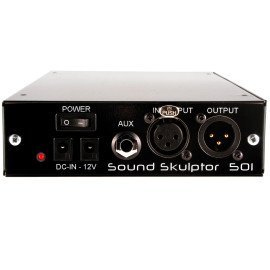
The SK501 is a single slot, 500 series compatible case and power supply.
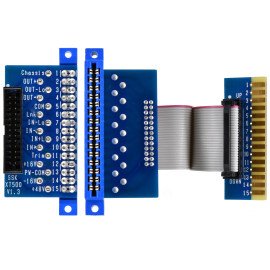
The XT500 is an extension cable which lets you connect a 500 series module to your lunchbox while keeping it outside for easy setting or maintenance.

This screwdriver has a recessed head at one end which prevents it from sliding off the trimmer potentiometer head you are adjusting. Very convenient when you are working inside your lunchbox.
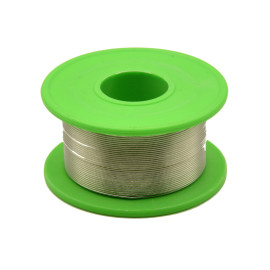
Lead-free solder spool, SN99.3 CU0.7, 0.5mm diameter, 50 grams
We've noticed that many of the assembly challenges reported by beginners are caused by inappropriate solder. This spool should eliminate those problems.
The TS500 is an analog processor that recreates the sonic imprint of vintage tape recorders. It provides the roundness, the punch, the compression and the saturation of magnetic tape.
07/17/2022
Fantastic!
Brilliant unit. Bought two, easy build and set-up. Adds warmth and squeeze to everything, dial-able saturation. Sounds great on drumbus and mix bus. Thank you!